Change Management vs. Project Management: What’s the Real Difference?
If you’ve ever tried to grow your business, launch something new, or make a meaningful shift in how you work, you’ve probably felt the tension between getting the work done and getting people aligned around the work.
That tension is the difference between project management and change management — and understanding both is one of the most powerful clarity tools a small business can have.
If you’re new here, my Start Here guide walks you through the simplest way to get organized.
Most small business owners don’t use these terms, but they feel the effects every day. A project stalls. A new process doesn’t stick. A launch feels heavier than it should. It’s not because you’re doing anything wrong. It’s because you’re trying to manage the work and the people without a structure for either.
Let’s break down the difference in a way that actually makes sense for real‑world small businesses.
1. Project Management: The work itself
Project management is the structure behind the work. It answers the practical questions:
- What are we doing
- When are we doing it
- Who is responsible
- What are the milestones
- What resources do we need
It’s the timelines, the tasks, the deliverables, the dependencies — the tangible pieces that move a project from idea to completion.
In a small business, project management looks like:
- mapping out your launch plan
- organizing your client onboarding workflow
- planning a website redesign
- breaking a big idea into manageable steps
It’s the backbone of execution.
I use a few simple tools to keep projects organized — you can see them in my Tools I Recommend list.
2. Change Management: The people side of the work
Change management is about helping people adopt, understand, and support the change you’re making.
It answers the human questions:
- Why are we doing this
- How will this impact me
- What do I need to know
- What support do I need
- How do we communicate this clearly
In a small business, change management shows up when:
- you introduce a new tool or process
- you shift responsibilities
- you refine your service delivery
- you grow your team
- you change how you work internally
It’s the emotional, relational, and communication layer that makes change stick.
3. Why both matter — especially in small businesses
Most small businesses unintentionally lean too far in one direction.
If you focus only on project management: You’ll have a beautiful plan that no one follows.
If you focus only on change management: Everyone will feel informed and supported… but the work won’t move.
Operational clarity requires both:
- a structure for the work
- a structure for the people
When these two disciplines work together, projects run smoother, communication feels lighter, and your team (or future team) knows exactly what’s happening and why.
4. How they work together in real life
Here’s a simple example:
Project management builds the launch plan. Change management prepares your team (or clients) for what’s changing.
Project management outlines the tasks. Change management ensures people understand their roles.
Project management sets the timeline. Change management communicates expectations and supports adoption.
When both are present, you get alignment, momentum, and clarity — not friction.
You can see how this plays out in real life in my case studies.
5. Why I integrate both in my templates
Most templates on the internet focus on one or the other. But small businesses don’t have the luxury of separating them — you need both working together in a simple, accessible way.
That’s why tools like:
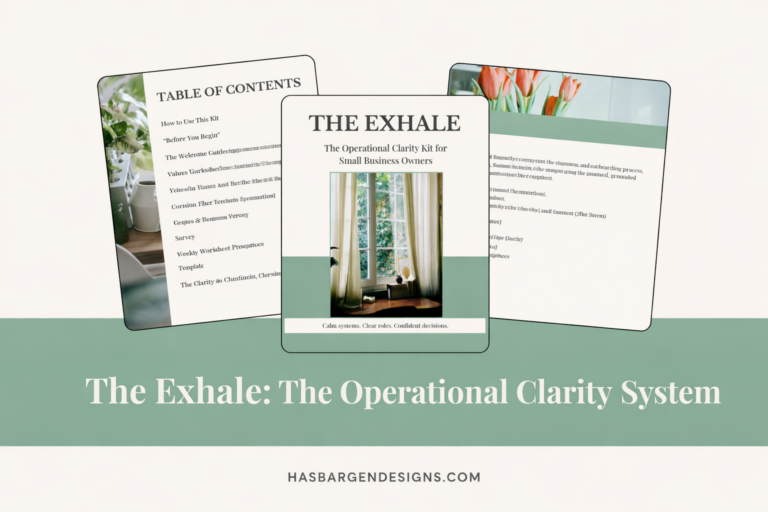
- The Integrated Charter
- The Integrated Roadmap
- The Integrated Project Plan
- The Communication Plan & Message Builder
…are designed to blend project and change management into one cohesive system.
Because when you manage the work and the people, everything becomes easier.
The real difference
Project management moves the work. Change management moves the people. Operational clarity happens when both move together.
If you’re ready to bring more structure, alignment, and calm into your business, this is the place to start.
Visit the Shop for more resources.