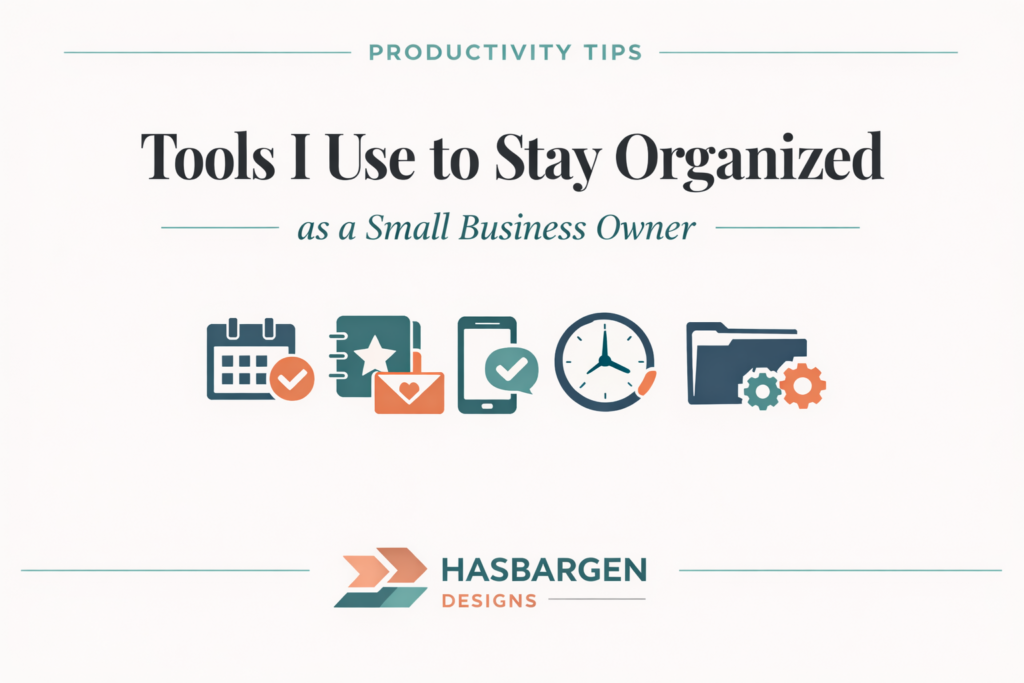
Tools I Use to Stay Organized as a Small Business Owner
Staying organized as a small business owner isn’t about having the perfect system — it’s about having the right tools that support the way you work. With so many platforms and apps available, it’s easy to feel overwhelmed or pressured to use tools that are more complicated than you need.
The truth is that simple tools, used consistently, can make your workday calmer, clearer, and more manageable. These are the tools I rely on every day to stay organized, focused, and confident in my workflow as a small business owner.
If you’re new here, my Start Here guide walks you through the simplest way to get organized.
Disclosure: Some of the links on this page are affiliate links, which means I may earn a small commission if you make a purchase through them—at no extra cost to you. Rest assured, I only recommend products and services that I personally use and love, and I believe they will genuinely help you and your small business. Your trust is important to me, and I’m committed to providing resources that offer real value.
1. A Project Management Tool That Fits Your Brain
You don’t need a complex platform to stay organized — you just need one place to track what’s happening.
A project management tool helps you:
- keep tasks in one place
- see deadlines clearly
- organize client work
- reduce mental load
- stay aligned if you work with contractors or collaborators
Whether you prefer ClickUp, Monday, Asana, Wrike or a simple spreadsheet, the key is consistency. Choose the tool that feels intuitive and stick with it.
2. A Digital Notebook for Ideas and Quick Notes
Every business owner needs a place to capture ideas, reminders, and thoughts throughout the day. A digital notebook keeps everything searchable and accessible.
This is where I store:
- content ideas
- meeting notes
- quick reminders
- outlines
- brainstorming sessions
It’s the perfect “catch‑all” space that keeps your brain clear and your ideas organized.
3. A Clean File Management System
A simple, structured file system saves time and reduces stress — especially when you’re juggling multiple clients or projects.
A good file system includes:
- clear folder categories
- consistent naming conventions
- shared access when needed
- a home for brand assets, templates, and documents
When everything has a place, you spend less time searching and more time doing.
4. A Calendar You Actually Use
Your calendar is one of the most powerful organization tools you have.
It helps you:
- protect your time
- plan your week
- set boundaries
- stay on top of meetings and deadlines
Whether you use Google Calendar, Outlook, or a paper planner, the goal is the same: create a rhythm that supports your work, not one that overwhelms it.
5. A Simple Financial Tracking Tool
You don’t need a full accounting platform to stay financially organized — you just need clarity.
A basic financial tool helps you track:
- income
- expenses
- subscriptions
- recurring payments
- monthly reviews
This gives you a clear picture of your business health and helps you make informed decisions.
6. Templates That Save Time and Reduce Rework
Templates are one of the most underrated tools for staying organized.
They help you:
- streamline communication
- deliver consistent work
- reduce repetitive tasks
- save time on admin
- create a smoother client experience
From onboarding to project delivery, templates bring structure and clarity to your workflow.
You can see how this plays out in real life in my case studies.
Start Simple — Consistency Creates Clarity
You don’t need dozens of tools to stay organized.
You just need a few that support your workflow and help you stay focused.
Start with the tool that feels most helpful right now, and build from there.
Small improvements create big momentum.
A Gentle Next Step
If you’re ready to bring more clarity and structure into your business, I can help you build simple systems that support your workflow — without adding complexity.
You can explore:
- Services — clarity‑driven operational support for small businesses
- Templates — ready‑to‑use tools that help you stay organized
You don’t have to build everything alone. A few simple tools can make your workday feel lighter and more manageable